
Post-Incarceration Syndrome (PICS) is a trauma-based condition describing the long-term psychological and behavioral effects of incarceration.
While incarceration requires constant vigilance, emotional suppression, and strict control to survive, those same responses can become barriers once a person returns to the community.
PICS is not a diagnosis meant to label people—it is a framework that explains what happens when survival never gets turned off.
PICS commonly includes:
- Chronic hypervigilance and threat awareness
- Emotional numbing, detachment, or shutdown
- Difficulty trusting authority or institutions
- Impaired decision-making under stress
- Disrupted family and social relationships
These responses are adaptive in prison.
They become disruptive in freedom.
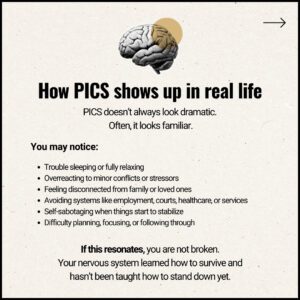
HOW PICS SHOWS UP IN REAL LIFE
PICS doesn’t always look dramatic.
Often, it looks familiar.
You may notice:
- Trouble sleeping or fully relaxing
- Overreacting to minor conflicts or stressors
- Feeling disconnected from family or loved ones
- Avoiding systems like employment, courts, healthcare, or services
- Self-sabotaging when things start to stabilize
- Difficulty planning, focusing, or following through
If this resonates, you are not broken.
Your nervous system learned how to survive—and hasn’t been taught how to stand down yet.
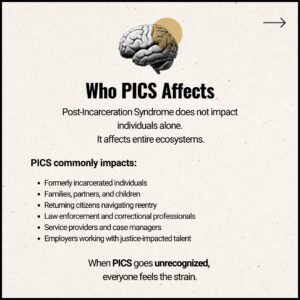
WHO PICS AFFECTS
Post-Incarceration Syndrome does not impact individuals alone.
It affects entire ecosystems.
PICS commonly impacts:
- Formerly incarcerated individuals
- Families, partners, and children
- Returning citizens navigating reentry
- Law enforcement and correctional professionals
- Service providers and case managers
- Employers working with justice-impacted talent
When PICS goes unrecognized, everyone feels the strain.
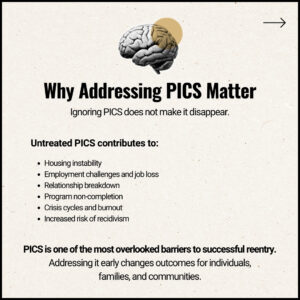
WHY ADDRESSING PICS MATTERS
Ignoring PICS does not make it disappear.
Untreated PICS contributes to:
- Housing instability
- Employment challenges and job loss
- Relationship breakdown
- Program non-completion
- Crisis cycles and burnout
- Increased risk of recidivism
PICS is one of the most overlooked barriers to successful reentry.
Addressing it early changes outcomes—for individuals, families, and communities.
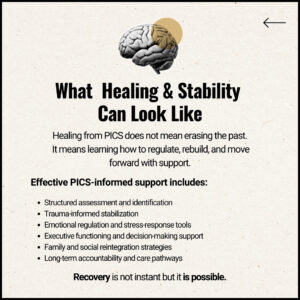
WHAT HEALING AND STABILITY CAN LOOK LIKE
Healing from PICS does not mean erasing the past.
It means learning how to regulate, rebuild, and move forward with support.
Effective PICS-informed support includes:
- Structured assessment and identification
- Trauma-informed stabilization
Emotional regulation and stress-response tools
- Executive functioning and decision-making support
- Family and social reintegration strategies
- Long-term accountability and care pathway
Recovery is not instant—but it is possible.